The quarter south of the Old Town
Kazimierz: Kraków's Jewish quarter in brief
A short, sourced history of Kazimierz, from its founding in 1335 to the ghetto in Podgórze, with notes on visiting its synagogues and memorials with care.
Reserve a seat for the concert ↗A town beside Kraków
Kazimierz was founded in 1335, when King Casimir III of Poland declared two western suburbs of Kraków a new town named after him. For centuries it was an independent royal city, south of the Old Town and separated from it by a branch of the Vistula. The river bed was filled in at the end of the nineteenth century. Kazimierz is now part of Kraków, and its northeastern part was historically Jewish. For many centuries Polish and Jewish cultures coexisted and intermingled there.
How the Jewish quarter formed
Jews had played a role in Kraków's economy since the end of the thirteenth century. After a disastrous fire in 1494, the Polish king John I Albert ordered the Jews out of the Old Town in 1495 and allowed them to settle in the Bawół district of Kazimierz. The walled area known as the Oppidum Judaeorum, the Jewish City, covered about a fifth of Kazimierz but held nearly half its inhabitants.
The synagogues
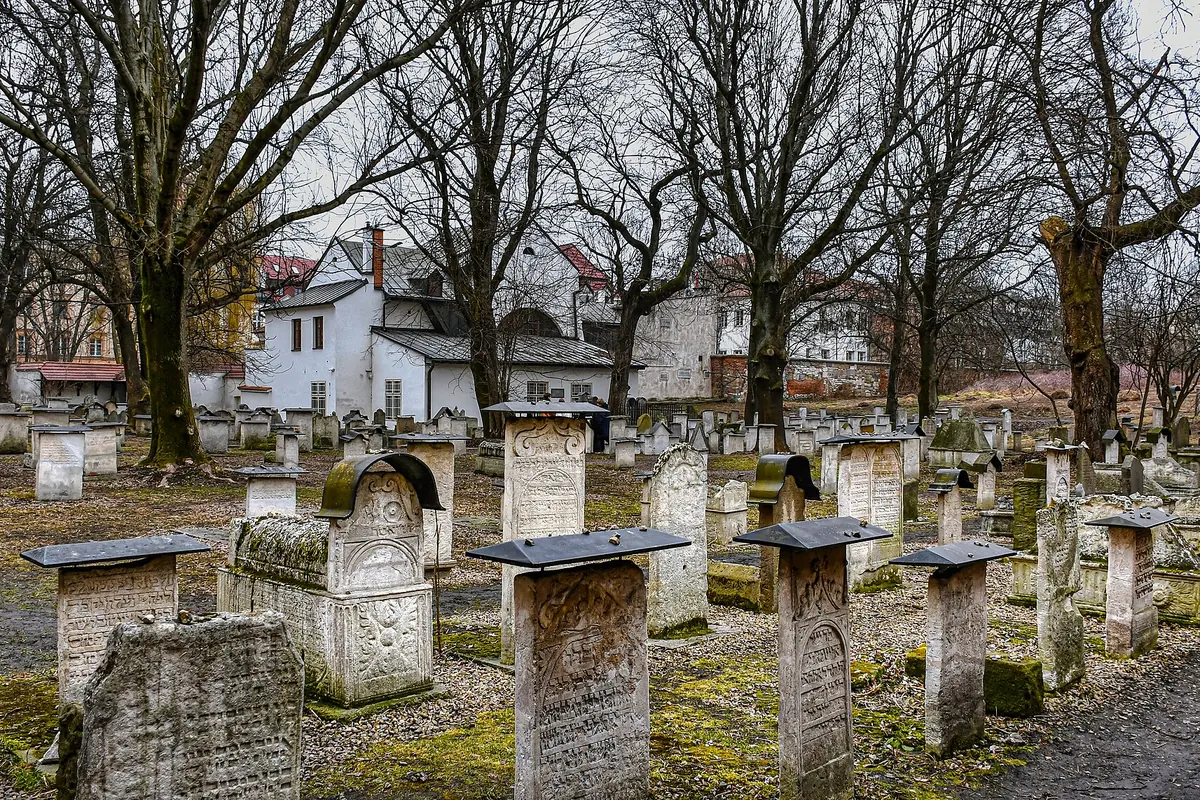
The Old Synagogue, the oldest synagogue building still standing in Poland, was built in the fifteenth century. Sources disagree between 1407 and 1492, and it was rebuilt in 1570. Since 1958 it has been a museum. The Remuh Synagogue was completed in 1557 and named in honour of Rabbi Moses Isserles, whose Hebrew acronym is Rema. It stands beside an old Jewish cemetery, and it is still a working synagogue.
The other synagogues
Wikipedia's map of the Jewish part of Kazimierz lists several more synagogues: the Old Synagogue, the Remuh, the High Synagogue, the Izaak Synagogue, the Kupa Synagogue and the Tempel Synagogue, which is still active. Several of them stand on or near Szeroka Street, where the Old Synagogue and the Remuh face the same street, which makes it a natural walking route. Each building has its own opening times and visiting rules, so check them one by one.
Before the war
Kazimierz lost its status as a separate city after the Third Partition of Poland in 1795 and became a district of Kraków. Many richer Jewish families moved out of the crowded streets, but because of the ban on travel on the Sabbath most stayed close to the old synagogues. By the 1930s Kraków had 120 registered synagogues and prayer houses across the city. The United States Holocaust Memorial Museum records that some 56,000 Jews lived in Kraków on the eve of the war, almost a quarter of the city's population of about 250,000.
The ghetto and the Holocaust
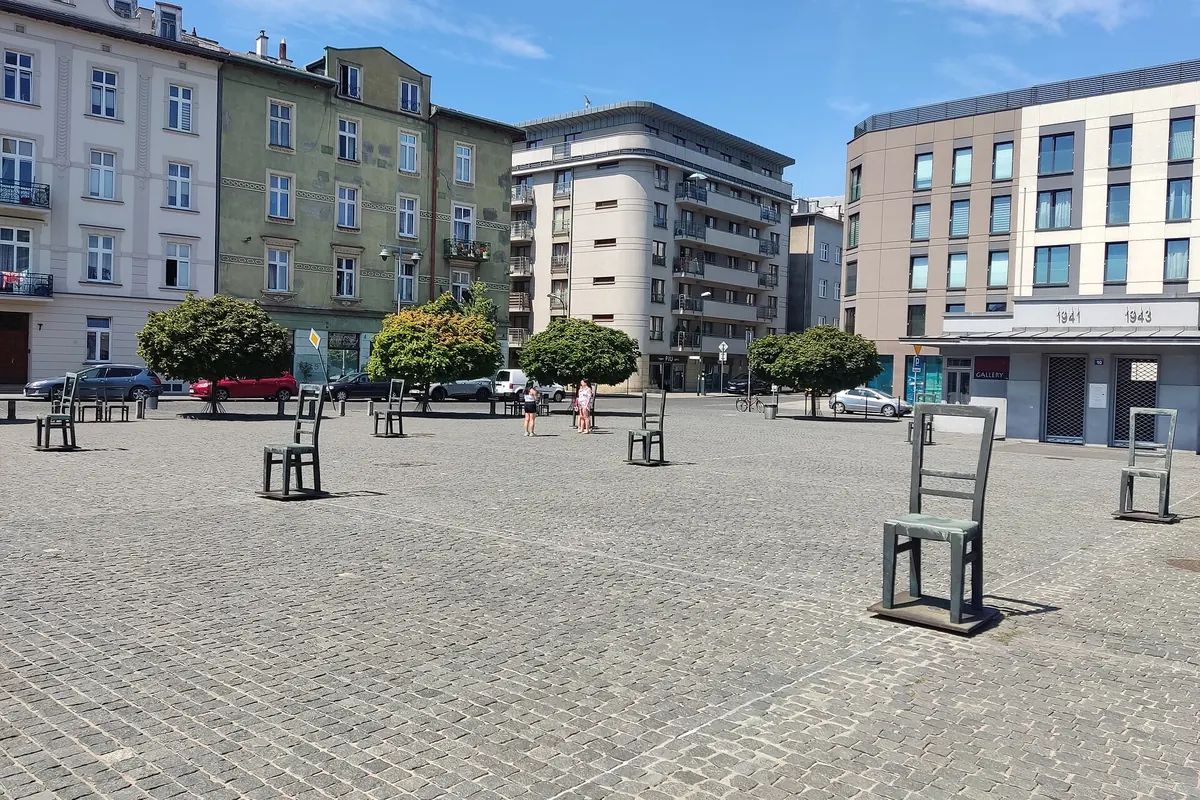
In early March 1941 the Germans ordered a ghetto to be set up in Podgórze, a suburb across the river, rather than in Kazimierz. By 21 March the remaining Jews of Kraków and thousands from other towns were confined there, between 15,000 and 20,000 people. In 1942 deportations sent thousands to the Belzec killing centre. On 13 and 14 March 1943 the SS liquidated the ghetto. Most of Kraków's Jews were murdered.
After 1945
Kazimierz was largely ruined and then neglected. On 11 August 1945 anti-Jewish violence broke out in the district, the Kraków pogrom, in which a synagogue was burned and many Jews were assaulted. The communist authorities left the quarter a crumbling ruin. In 1988 the first Jewish Culture Festival began to draw Cracovians back, and after 1993, when much of Schindler's List was filmed there, restoration and tourism grew.
Where to learn more
Three places give the history in the voice of museums and memorials. The Old Synagogue at Szeroka 24 presents the history and culture of Kraków's Jews. The Galicia Jewish Museum at Dajwór 18 runs a permanent exhibition called Traces of Memory. Ghetto Heroes Square in Podgórze, once called Plac Zgody, marks the ghetto with a memorial of empty chairs. Check each place's own page for opening times and entry rules.
Visiting with care
Kazimierz is a living neighbourhood and a place of memory at once. Remember that the Remuh courtyard walls carry inscriptions for Kraków's Jews murdered in the Holocaust, that the Remuh is a working synagogue and that the cemetery beside it is a burial ground. Follow each site's posted rules, dress respectfully, and keep photography and noise in check. A klezmer concert in the Old Town pairs well with a day here, but one does not replace the other.
Sources